INTRODUCTION
Imagine an investor who has decided to invest in building your project—a data center.
As a newcomer to the field, he will encounter a number of terms that sound like a riddle: Redundancy, Scalability, Agility, Sustainability. Deep down, the investor understands that these terms are key to understanding the fundamental principles and requirements for data centers and therefore asks you to explain their meanings in greater detail. To gain a deeper understanding of something and its underlying essence, it is often helpful to present information not as a dry collection of facts, but as a vivid, engaging story. Such a story resembles a spiral, where each turn not only repeats the previous one but also adds something new, expanding and deepening our understanding. In the context of the development of data center resilience concepts, this is precisely the kind of spiral narrative that takes us through the various stages of evolution: from the initial ideas of redundancy to more complex concepts of scalability, flexibility, and, ultimately, resilience. Each stage of this story reveals new aspects of how to create a data center that can withstand internal and external challenges.
The evolution of the concept of fault tolerance in the data center industry resembles a movement from the “core” toward the “periphery.” While the initial focus was on internal mechanisms and systems, it gradually became clear that true resilience requires a much more comprehensive approach.
REDUNDANCY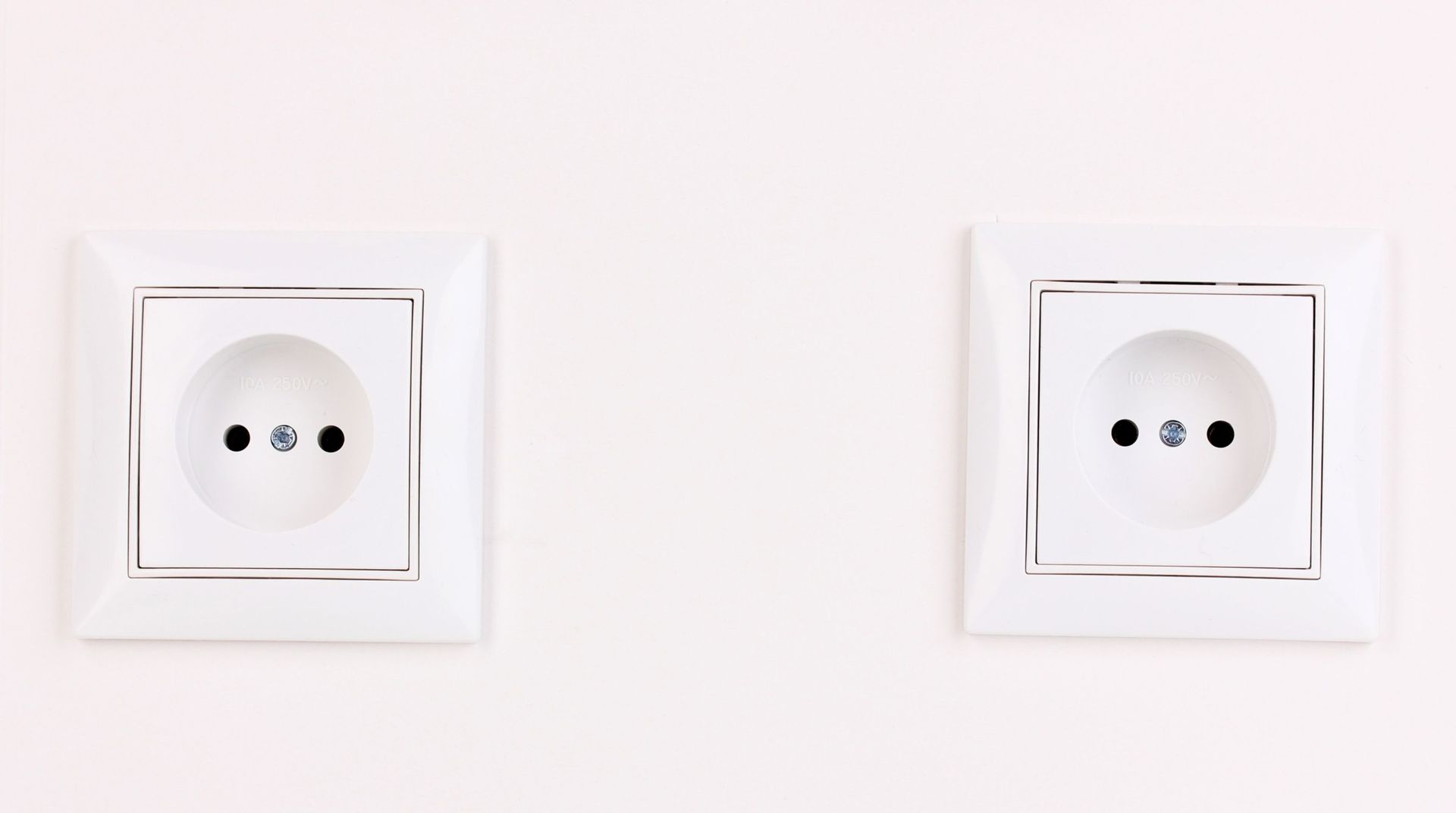
The earliest concepts, such as Redundancy, focused on the internal systems of the data center. The primary concern was ensuring that critical equipment had backup capacity and could operate without failures.
The term Redundancy means that a data center must have a system of backup components. Why is this important? Imagine that one piece of equipment fails. Without redundancy, the entire data center could shut down. With a backup system, however, data center operations can continue without interruption.At the turn of the 1990s and the beginning of the 2000s, the primary concern in data center design was ensuring Redundancy. In an era when digitalization was just gaining momentum, the most important thing was to have backup systems and equipment so that, if the primary equipment failed, uninterrupted operation could be maintained.
SCALABILITY

By the end of the 2000s, the world was facing a new challenge. Data centers began rapidly increasing in capacity, which meant that reserves were quickly being depleted. It was then that the concept of Scalability came to the forefront. This was the period when data center managers realized that adapting to growing requirements was no less important than having redundancy.
Scalability means, for example, having 100 customers today and 1,000 tomorrow. Scalability means that your data center can easily “grow” or “shrink” depending on demand. This is important for responding to market changes and ensuring a high quality of service.
As capacity grew and data processing requirements increased, issues related to Scalability became critical. Data centers had to adapt, expand, and contract as needed.
Interestingly, to everyone’s surprise, the concept of Scalability was promoted not by data center owners or other respected experts in the field, but by manufacturers of engineering infrastructure equipment. They compared their scaling solutions to Lego. The approach was easy to understand: Lego blocks are universal, easy to combine, and offer endless possibilities for creation. Manufacturers claimed that using such a modular system, it was possible to build a standard data center as easily as assembling a construction set.
But by the end of the second decade, this approach came under criticism. The original idea was that all data centers would follow the same server deployment standard, most often 1U or 2U. Reality, however, showed that such complexes could not be standardized: Each data center has its own characteristics related to its location, customer requirements, equipment specifications, technologies used, and many other factors.
A data center can be built from “Lego blocks,” but the result will be different every time.
AGILITY

At the beginning of the second decade, the search for a universal data center concept continued. A new idea was introduced—one that would fully reflect the versatility of the data center concept: Agility (Flexibility)
💡 Agility (Flexibility) is a concept that calls for flexibility and adaptability. It does not simply imply the ability to scale, but also a readiness to adapt to different types of equipment.
Standard servers, such as 1U or 2U, can be easily integrated into most data centers. However, the data center’s engineering infrastructure must be ready to deploy equipment with specialized cooling requirements. This may include devices with unique air intake and exhaust configurations or equipment designed for non-standard racks.
The concept of Agility emphasizes the need to create data centers that can quickly and effectively adapt to any changes in equipment requirements, as technology is changing very rapidly.
If a data center cannot be universal, it must be sufficiently flexible to ensure the effective management of equipment in different formats (standard servers, oversized servers, servers with non-standard cooling directions).
SUSTAINABILITY

But the concept of Agility was also far from perfect. It did not envision a data center’s adaptability to various external challenges and factors. These factors include environmental sustainability, energy efficiency, social responsibility, economic viability, and even the political stability of the region where the data center is located.
The essence of Sustainability is to ensure the effective operation of a data center while minimizing its negative impact on the environment and society. This means not only using “green” technologies, but also ensuring social responsibility, taking local community interests into account, and engaging in strategic planning to guarantee long-term economic sustainability.
💡 Sustainability means sustainable development
After the Covid-19 pandemic, it became clear that the world does not stand still, and data centers must be ready for any unexpected changes, whether global crises, climate change, or socioeconomic upheavals. Sustainability has become not just a buzzword, but an integral part of the management strategy for a modern data center.
Sustainability cannot be viewed solely through the lens of technical redundancy or equipment reliability. Understanding Sustainability goes far beyond simply accounting for resources and the technical condition of equipment or considering the use of new technologies. It is a global perspective that takes into account a data center’s impact on the environment, its social role and contribution to society, as well as its long-term economic prospects.
Sustainability is strategic planning that takes into account every aspect of operations, from environmental to economic considerations, while ensuring its continuous and efficient operation in the future.
If we allow ourselves a free interpretation of the classic words of the great Russian writer Anton Chekhov, we can describe data centers as follows:
💡 “Everything in a data center must be fault-tolerant: both internally and externally”
This emphasizes the importance not only of internal systems and mechanisms, but also of resilience to external factors, whether environmental, economic, or social changes. Only such a comprehensive approach can ensure the efficiency and long-term operation of a data center.